
 Amy Byrne
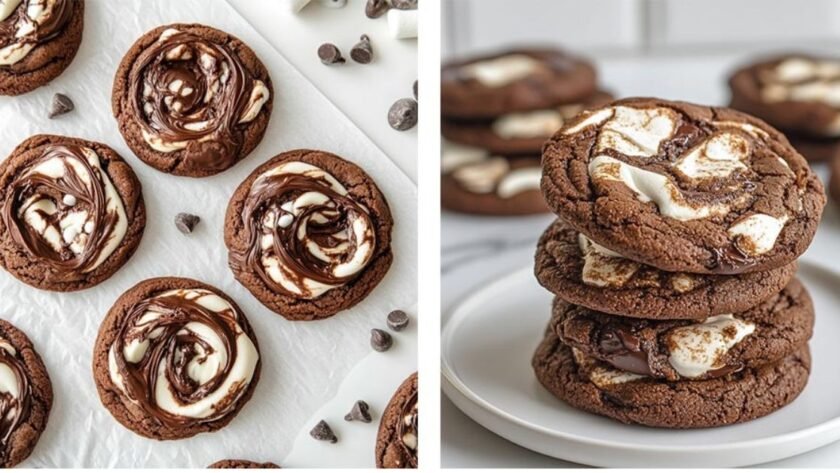
 Chocolate marshmallow swirl cookies combine a rich cocoa cookie with sweet, gooey marshmallow in every bite. The edges bake up slightly crisp while the centers stay soft, and the white marshmallow swirls create a beautiful contrast against the dark chocolate dough.
They’re a lovely choice for holiday cookie trays, weekend baking, bake sales, or an afternoon treat with coffee or a glass of milk. You can make them with marshmallow fluff for delicate ribbons throughout the cookies, or use mini marshmallows for soft, chewy pockets.
The secret to getting the texture right is controlling how much the cookies spread and when you add the marshmallow. A little preparation helps you achieve cookies that look as good as they taste.
Why You’ll Love Chocolate Marshmallow Swirl Cookies

- Rich chocolate flavor: Unsweetened cocoa powder gives the dough a deep chocolate taste, while chocolate chips add extra richness.
- Soft, gooey centers: Properly timed baking keeps the cookies tender rather than dry and hard.
- Beautiful marshmallow swirls: The contrasting white marshmallow against the dark cookie dough makes each cookie look distinctive.
- Easy to customize: You can add chopped nuts, change the type of chocolate, or adjust the marshmallow topping to suit your taste.
- Perfect for sharing: These cookies work well for family gatherings, dessert platters, holiday parties, and homemade gifts.
Ingredients
- 2 cups (240 g) all-purpose flour
- ½ cup (45–50 g) unsweetened cocoa powder
- ½ teaspoon baking soda
- ½ teaspoon salt
- ¾ cup (170 g) unsalted butter, softened
- ¾ cup (150 g) granulated sugar
- ½ cup (100 g) packed brown sugar
- 1 large egg, at room temperature
- 2 teaspoons vanilla extract
- ¾ cup (130 g) semisweet chocolate chips
- ½ cup marshmallow fluff, approximately, for swirling
Instructions
1. Prepare the oven and baking sheets. Preheat the oven to 350°F (175°C). Line two baking sheets with parchment paper.
2. Mix the dry ingredients. In a medium bowl, whisk together the flour, cocoa powder, baking soda, and salt until evenly combined.
3. Cream the butter and sugars. In a separate large bowl, beat the softened butter, granulated sugar, and brown sugar until creamy, about two to three minutes.
4. Add the egg and vanilla. Beat in the egg until incorporated, then mix in the vanilla extract.
5. Combine the mixtures. Add the dry ingredients to the butter mixture in batches. Mix just until no dry flour remains, then fold in the chocolate chips.
6. Chill the dough. Cover the bowl and refrigerate for about 30 minutes, or until the dough is firm enough to scoop easily.
7. Shape the cookies. Scoop the dough into portions of roughly 1½ tablespoons each. Arrange them on the prepared baking sheets, leaving about two inches between cookies.
8. Add the marshmallow swirl. Place a small dab of marshmallow fluff on each portion. Use a toothpick to gently swirl it across the surface without fully mixing it into the dough.
9. Bake. Bake for 10–12 minutes, checking early because oven temperatures vary. The edges should look set while the centers remain slightly soft. If the marshmallow begins browning too quickly, remove the cookies when they’re done rather than waiting for the topping to stay perfectly white.
10. Cool. Leave the cookies on the baking sheet for five minutes before transferring them to a wire rack. Let them cool enough for the marshmallow to settle before serving.
Expert Tips and Tricks
A few small adjustments can make a noticeable difference in the finished cookies.
- Chill the dough when necessary. If your dough feels sticky or soft, refrigerate it for 30–60 minutes before shaping. Chilling firms the butter and makes the dough easier to handle.
- Measure the flour accurately. Too much flour can leave the cookies dry and cakey. A kitchen scale gives the most consistent results; if using measuring cups, spoon the flour in and level it off rather than packing it down.
- Use a cookie scoop. Uniform dough portions bake at a similar rate, so you won’t end up with some cookies overbaked while others remain underdone.
- Line your baking sheet. Parchment paper makes cleanup easier and helps prevent melted marshmallow from sticking to the pan.
- Add marshmallow strategically. Marshmallow fluff can melt and spread considerably in the oven. For more visible swirls, add a small amount to each portion of dough shortly before baking or during the final few minutes, depending on how your oven behaves.
- Don’t overbake. Remove the cookies when the edges are set but the centers still look slightly soft. They will continue to firm up on the hot baking sheet.
- Let them cool before moving them. Leave the cookies on the baking sheet for about five minutes before transferring them to a wire rack. Hot marshmallow can be sticky, and the cookies are fragile straight out of the oven.
Recipe Variations & Possible Substitutions
These cookies are easy to adapt, although some substitutions may change their texture.
- Vegan chocolate marshmallow cookies: Use a suitable plant-based butter, an appropriate egg substitute, dairy-free chocolate chips, and marshmallows labeled vegan. Check each ingredient’s label rather than assuming all marshmallows are plant-based.
- Gluten-free cookies: Replace the all-purpose flour with a gluten-free baking blend formulated as a direct substitute for wheat flour. Results depend on the blend, so follow its instructions if they differ from the original recipe.
- Nutty chocolate cookies: Fold chopped walnuts or pecans into the dough for a little crunch. Keep the pieces small enough that the cookies hold together.
- Chocolate cinnamon cookies: Add a small pinch of ground cinnamon to the dry ingredients for a gentle warming flavor.
- Double chocolate cookies: Use dark or semisweet chocolate chips in the cocoa dough for extra chocolate in every bite.
- S’mores-inspired cookies: Add a small amount of crushed graham crackers and use chocolate chunks with the marshmallow swirl. Avoid adding too many dry mix-ins, which can make the dough crumbly.
Dietary Adjustments
You can make a few changes to accommodate different dietary preferences.
- Gluten-free: Use a gluten-free flour blend intended for cookies. Check the labels on your chocolate chips and marshmallow product as well.
- Dairy-free: Choose plant-based butter and dairy-free chocolate chips. Marshmallow products vary by brand, so check the ingredients.
- Less sweet: Use dark chocolate chips and reduce the granulated sugar modestly. Sugar also affects how cookies spread and brown, so large reductions may change the result.
- Egg-free: Try a commercial egg replacer designed for baking. The cookies may have a different texture, particularly if the replacement doesn’t provide the same binding and structure as an egg.
Serving and Pairing Suggestions
These cookies taste wonderful after they’ve cooled enough to set but still retain a little warmth. The chocolate is rich, and the marshmallow becomes soft and sticky when the cookies are freshly baked.
For a simple afternoon treat, serve them with cold milk, coffee, or hot chocolate. If you’re making dessert for guests, arrange them on a platter with strawberries or other fresh fruit to balance the sweetness.
You can also serve a slightly warm cookie with vanilla ice cream. For holiday gatherings, combine them with gingerbread, shortbread, or peppermint treats for a varied dessert selection.
If you’re packing the cookies as gifts, let them cool completely first. This prevents trapped steam from softening the cookies and making the marshmallow sticky inside the container.
Storage and Reheating Tips
Storing at Room Temperature
Allow the cookies to cool completely, then place them in an airtight container. Keep them in a cool, dry place and aim to enjoy them within three to five days for the best texture.
If the marshmallow remains sticky, separate the layers with parchment paper. Avoid stacking the cookies while they’re still warm.
Freezing the Cookies
You can freeze either the baked cookies or the unbaked dough.
- Baked cookies: Cool completely, arrange in a freezer-safe container with parchment between layers, and freeze for up to three months for best quality.
- Cookie dough: Scoop the dough into individual portions and freeze them on a lined tray. Once firm, transfer the portions to a freezer bag or sealed container. Label the container with the date and baking instructions.
For the best-looking swirls, you may prefer to add the marshmallow shortly before baking rather than freezing dough that already contains a large amount of fluff.
Reheating Chocolate Marshmallow Cookies
To soften a cookie, microwave it for approximately 5–10 seconds, then check the texture. Add a little more time only if necessary.
You can also warm the cookies in an oven at about 300°F (150°C) for a few minutes. Watch them closely because the marshmallow can become very hot and sticky.
Let reheated cookies stand briefly before eating.
Recipe FAQs
Can I use regular marshmallows instead of marshmallow fluff?
Yes. Mini marshmallows can provide soft, chewy pockets, while larger marshmallows can create bigger melted sections. However, regular marshmallows won’t necessarily produce the same delicate ribbons as marshmallow fluff.
For a more defined swirl, use a small amount of fluff and gently drag a toothpick through it. Avoid mixing it completely into the dough.
How do I prevent the cookies from spreading too much?
Measure the flour accurately, avoid using butter that’s melted when the recipe calls for softened butter, and chill the dough if it feels too soft. Also, place the dough on a cool baking sheet rather than one that’s still hot from a previous batch.
Can I prepare the cookie dough ahead of time?
Yes. Cover the dough and refrigerate it for up to two days for best quality. If it becomes very firm, let it sit at room temperature briefly until it’s manageable.
You can also freeze individual dough portions for longer storage. Baking time may need to increase slightly when baking directly from frozen.
Why did my marshmallow disappear into the cookies?
Marshmallow fluff softens and spreads when heated, so it may blend into the dough rather than remain as a distinct swirl. Try using a smaller amount, placing it closer to the surface, and adding it later in the baking process.
Mini marshmallows may also melt into the dough, particularly if they’re mixed throughout the cookie.
How can I make the cookies less sweet?
Use dark chocolate chips and reduce the sugar slightly. A small increase in salt may also help balance the flavor, but avoid making substantial changes to the sugar in your first batch because it affects the cookies’ structure.
Why are my chocolate cookies hard instead of soft?
Overbaking is a common cause. Chocolate dough can make it difficult to judge doneness by color alone, so look for set edges and centers that still appear a little soft.
Also check that you measured the flour correctly. Too much flour can make the cookies dry, while an oven that runs hotter than its setting can bake them too quickly.
Detailed Ingredient Breakdown
Understanding the ingredients makes it easier to adjust the recipe without compromising the texture.
- All-purpose flour: Provides the structure that holds the cookies together. Too much can make them dense and dry.
- Unsweetened cocoa powder: Gives the cookies their chocolate flavor and dark color. Natural and Dutch-process cocoa powders can behave differently in recipes, so use the type specified in your chosen recipe when possible.
- Unsalted butter: Adds richness and affects how the dough spreads. Softened butter should yield slightly when pressed but should not be greasy or melted.
- Granulated sugar: Sweetens the dough and contributes to spreading and browning.
- Brown sugar: Adds moisture and a slightly caramel-like flavor. It also helps produce a chewier texture.
- Egg: Binds the ingredients together and contributes moisture and structure.
- Vanilla extract: Rounds out the flavor of the chocolate.
- Baking soda: Helps the cookies spread and brown. Use the amount specified in the recipe.
- Salt: Balances the sweetness and brings out the chocolate flavor.
- Chocolate chips: Add concentrated chocolate flavor and small pockets of melted chocolate.
- Marshmallow fluff or mini marshmallows: Provide the soft, sweet contrast. The amount and timing of the marshmallow determine how pronounced the swirls will be.
Troubleshooting Tips
Cookies Spreading Too Much
If the cookies flatten more than expected, the butter may have been too warm, the dough may need chilling, or the flour measurement may have been too low. Refrigerate the remaining dough before baking another batch.
Check your oven temperature as well. An oven thermometer can help identify a setting that’s inaccurate.
Marshmallows Burning or Disappearing
Marshmallow contains sugar, so exposed portions can brown or burn before the cookie finishes baking. Try adding the marshmallow closer to the end of the baking time, and avoid placing large amounts directly on the edges of the cookies.
If you’re using fluff, a small swirl is usually easier to control than a large spoonful.
Cookies Too Hard or Crispy
Reduce the baking time slightly on your next batch. Remove the cookies when the edges have set and the centers are still soft.
Allow them to rest on the baking sheet for five minutes before moving them to a cooling rack. The residual heat will finish setting the centers.
Dough Too Sticky to Handle
Refrigerate the dough for 30–60 minutes. If it’s still sticky, use a cookie scoop to portion it rather than adding large amounts of flour, which can change the finished texture.
Uneven Baking
Make sure the cookies are similar in size and have enough space between them. Bake one tray at a time in the center of the oven when possible, and rotate the tray if your oven has noticeable hot spots.
Marshmallow Making the Cookies Difficult to Remove
Use parchment paper or a silicone baking mat. Allow the cookies to rest briefly before lifting them with a thin spatula. If marshmallow has spread beyond the cookie edges, loosen those areas gently rather than pulling the cookie off the pan while it’s hot.
Chocolate Marshmallow Swirl Cookies Recipe
Prep time: 20 minutes · Chill time: 30 minutes · Bake time: 10–12 minutes per batch · Makes approximately 20–24 cookies
These chocolate marshmallow swirl cookies have a soft cocoa base, chocolate chips, and visible ribbons of marshmallow. Chilling the dough helps with handling, while adding the marshmallow near the end of preparation helps preserve the contrast between the two.
Recipe Notes
- For more visible marshmallow swirls, use a small amount of fluff and keep it near the surface.
- If the dough becomes soft while shaping, return it to the refrigerator for a few minutes.
- For a stronger chocolate flavor, use dark chocolate chips.
- Baking time will vary with cookie size and oven performance, so use the appearance of the edges and centers rather than time alone.
- Store cooled cookies in an airtight container and freeze any extras you won’t eat within a few days.
